Tuesday, September 17, 2013

In Ethiopia, more land grabs, more indigenous people pushed out - CSMonitor.com


A journalist's visit to South Omo, where rights groups say police have raped women and otherwise pressured locals to leave an area tagged to become a huge sugar plantation, was quickly curtailed by authorities.

By Will DavisonCorrespondent / September 16, 2013
In an August 2013 photo, people from the Mursi ethnic group are seen on the road from Hailewuha to Jinka in the South Omo Zone of Ethiopia.
William Davison

Enlarge
HAILEWUHA VILLAGE, SOUTH OMO, ETHIOPIA
As night wore on in a remote valley in southern Ethiopia, one policeman dozed and another watched a DVD comedy on a battery-powered laptop.

Close by, in a clutch of thorn trees and grass huts, an ethnic Mursi man tried to explain to outsiders why he is so concerned for his people, who have lived here as semi-nomads for generations but may soon be evicted to make way for a giant sugar plantation.
"We Mursi [people] do not accept this ambitious government ideology," the man said of an official state plan to house them in new villages in exchange for their compliant departure. He is speaking in the village of Hailewuha, his face lit by flashlight. Cattle shuffle and grunt nearby.
"What we want is to use our own traditional way of cultivation," he says.
Ethiopian officials say the Mursi, like a growing number of ethnic or tribal groups in Ethiopia, are voluntarily moving out of their ancient lands; human rights groups say this is untrue.
The ongoing controversy is not new in Ethiopia, and "land grabs" by governments for lucrative leasing deals have become a story across the continent. 
For example, in Ethiopia's lush Gambella region, in the western area bordering Sudan, locals have been forcibly relocated to make way for the leasing of farms to foreign firms. This year, the World Bank and British aid agencies were swept into controversy over charges they helped fund the relocation including salary payments to local officials involved in the clearing of land. 
The Mursi have lived in Omo for centuries. Partly for this reason they get frequent visits by tourists and anthropologists alike. Tall and elaborately decorated, their scarified bodies are daubed with paint and ornamented by hooped earrings and bicep bangles.
But now the Mursi may be those most affected by government operations to overhaul South Omo, an area that officials in Addis Ababa are calling economically and socially backward.
The plan would turn this scrub and savanna into about 700 square miles of state-owned sugar plantations that would in turn require building Ethiopia’s largest irrigation project.
The water to feed the sugar cane year-round is to come from the Omo river, and is made possible by Gibe III, a partly Chinese-funded hydropower dam that may be completed as early as next year. The cane will be processed at some five local factories.
The people of this valley, the Mursi, Bodi, and Karo, some of whom number only a few thousand, would need to reduce their cattle -- their most prized possessions. Then many if not all will move into enlarged permanent villages.
Controlling the flow of the river will mean the end of an annual flood that makes fertile a strip of land for crops once the seasonal waters recede. An ongoing attempt to control Mursi traditions now means that at public meetings, state authorities implore the group to end “very bad” cultural practices like stick fighting and their characteristic lip-plates.
To be sure, Ethiopian authorities promise new jobs, public services, and plenty of irrigation for every Omo household that agrees to move out.
But this is not the view of international human rights groups who claim that Ethiopia is broadly and constantly harming locals as part of an authoritarian model of development.
In the most recent salvo, the Oakland Institute accused the state of using killings, beatings, and rapes as methods of forcing South Omo residents to accept the sugar cane projects. The California-based advocacy group also accused Western aid agencies and some US and British officials of covering up evidence of the abuses they heard about on research missions.
Instead of investigating claims made by Survival International, Human Rights Watch, and the Oakland Institute, Ethiopian authorities smear them as anti-development.
These groups help "drag Ethiopia back to the Stone Age," is how the prime minister's spokesperson, Getachew Reda, recently described Oakland's agenda.
“We have a scar from them [critics]," says the chief administrator of South Omo, Molloka Wubneh Toricha, about the activists and journalists who make the 400 mile journey from Addis Ababa to the Kenya-border area, hoping to monitor developments. "They try and blacken our image."
Yet in the single nighttime interview the Monitor was able to conduct with the Mursi, the criticism of the rights groups were echoed: "The government uses our ignorance and backwardness to control us,” said the Mursi man. “They force us to do farming…. Those who have been in the bush shall settle together in common village and be brothers. But our leaders do not accept this."
It is impossible to verify whether these comments reflect the community's opinion since officials and police prevented further inquiries by reporters in a trip there in August. 
 While regional officials at first permitted access to the Mursi, a few hours later, the administration backtracked.
Reporters on an independent visit were forced to camp next to the Hailewuha police station. A security commander regularly called in on a shortwave radio to check that the journalists were still corralled. Senior regional police arrived the next morning to escort them back to the regional capital, Jinka.
Later, apologetic officials in Jinka all had the same explanation: there had been a "misunderstanding." 
Yet rather than a genuine mix-up, the obstruction seemed to stem from a basic mistrust of outside eyes and voices. Mr. Molloka said journalists frequently "divert" the views of residents: "This is what burns our hearts," he says, "at public meetings we told all the people not to give information to journalists."
With media muzzled and most civil society initiatives stifled by restrictive laws, there is little independent information about what is happening in South Omo.
Along with the plight of the Mursi, for example, little is known about the impact of as many as 700,000 migrant workers that may move here to work on the sugar cane plantations.
Tewolde Woldemariam, a scholar and senior figure in the ruling party, who left in 2001, and an academician, Fana Gebresenbet, argue that the people, cultures, language and rights of South Omo people, which are theoretically protected by the constitution, are threatened by the new influx of migrant workers.
“Unless the problem is realized and mechanisms to tackle it are put in place, this demographic change puts the cultural and linguistic rights of the indigenous ethnic groups…at great risk," they wrote for a conference in April at the Institute for Peace and Security Studies at Addis Ababa University. 
The sugar and resettlement projects are well-intended but the scholars note there is little official response about possible adverse effects.
“The attitude of lumping everyone who raises the possibility of negative consequence of the development project on the local culture as one who wants to permanently perpetuate the pastoral lifestyle for tourist purposes is rampant at all levels of the region," they said.
The Mursi man that was interviewed at night said this: "If we will be mixed with external people, perhaps we will be exposed to some contagious diseases like HIV/AIDS which we have never experienced in life."
One important failing of trying to engineer and control the future of Omo, say analysts sympathetic to the nomads, is that local residents are kept from the design and involvement in policies concerning them. 
The Mursi man who we spoke to asked: "The government forces us to accept this project. Do you think this is a good way?" 

Thursday, September 12, 2013

Ethiopia to Continue Land Grabbing and Forced Resettlement


photo by TURKAIRO
photo by TURKAIRO
Millions of acres of Ethiopia’s most fertile lands are being offered to foreign investors, often in long-term leases and at bargain prices. At the same time, through its ‘villagization’ program, the Ethiopian government is forcibly displacing hundreds of thousands of Indigenous Peoples in order to free up their land so the transnational agro-industry can move in and grow foodstuffs and bio-fuels for export. It is a process of dispossession in which Indigenous Peoples are being forced to become dependent on aid handouts having lost their land and their ability to produce their own food.
For over a year, the Anuak and other Indigenous Peoples of the Gambella region of Southwest Ethiopia have been forced into government created villages which seldom contain the amenities promised to them. There is little access to food, arable land, water or electricity.
Last year the Anuak implicated the World Bank in the many severe human rights abuses that are being carried out as part of this resettlement. Last April, Bank President Dr. Jim Yong Kim announced, "The World Bank Group shares these concerns about the risks associated with large-scale land acquisitions. He conceded that more efforts "must be made to build capacity and safeguards related to land rights—and to empower civil society to hold governments accountable.”
The World Bank has been a key investor in several more land grabbing scandals across the developing world, despite their stated principles of respecting Indigenous People's right to Free, Prior and Informed Consent before projects that affect their lands.
However, in this case, the World Bank, with its links to the Ethiopian Government's Protection of Basic Services Program (sponsoring the villagization), has denied evidence that their funds are linked to villagization and says they haven't encountered any human rights violations in the area.
An independent panel at the World Bank has been created to investigate the issue. The Inspection Panel, argues the position of denying the allegations of financing human rights abuse is not sound, saying: "The two programs depend on each other, and may mutually influence the results of the other."
In a letter sent to the panel last year, Ethiopian refugees say some people have been forcibly relocated from their land, which is now being leased to foreign investors. “These mass evictions have been carried out under the pretext of providing better services and improving the livelihoods of the communities,’ says the letter. “However, once they moved to the new sites, they found not only infertile land, but also no schools, clinics, wells, or other basic services.” It also says they were forced to leave their homes and abandon their crops just before the harvest, and were not given any food assistance during the move. Those farmers who have refused to move from their land have been targeted for arrest, beating, torture and killing,” the letter says. The refugees state that they have been severely harmed by the World Bank financed project which is contributing to the Ethiopian Governments program of forced villagization.
US and UK development agencies have been tied to the same alleged abuses, especially in the Lower Omo Valley. Around the same time the World Bank was implicated for its sponsorship abuses and land theft, the U.K. Department for International Development (DFID) and the U.S. Agency for International Development (USAID) were accused of ignoring evidence of human rights abuses including intimidation, beatings and rape.
A farmer from the Gambella region is attempting to sue the UKgovernment after claiming that its funding of a project led to such human rights abuses against his family. The man--known as Mr. O--told his lawyers he was evicted from his farm, beaten and witnessed rapes as part of the "villagization" scheme.
According to his lawyers, Mr. O asserts that his family was forced to resettle in a new village where there was no replacement farmland or access to food and water. When he tried to return to his former home, Mr. O says he was hit repeatedly with a rifle butt and taken to a military camp by Ethiopian soldiers where he was gagged and subjected to further beatings.
Despite the list of human rights complaints and strong criticism from many human rights organizations, the Ethiopian government has vowed to continue with its villagization program in the coming years. 
The government has already moved 200,000 households into 388 resettlement centers. Anuradha Mittal, Executive Director of the Oakland Institute has said that it's up to the officials of the World Bank, USAID and DFID “to swiftly re-examine their role and determine how to better monitor funding if they are indeed not in favor of violence and repression as suitable relocation techniques for the development industry.”
Ethiopia currently receives more foreign aid than any other country in Africa--over $3 billion a year--the major donors being the United States and the United Kingdom.

Thursday, May 23, 2013

Ethiopia Land Grab Behind Settlement Plan, DFID Fail to Act on Human Rights Violations-allAfrica.com:

ANALYSIS
Photo: Ben Parker/IRIN
An Ethiopian farmer.
The Ethiopian government may be guilty of atrocities against indigenous peoples as it completes construction of the Gibe III dam. UK aid-agency DFID has failed to exert its influence and protect the rights of these minorities.
Ethiopia may until recently have been a byword for famine, but in one part of the country at least, there are people who have lived largely without outside help for hundreds of years. With the connivance of the British government, this is about to change forever.
The tribes of the Lower Omo Valley in south west Ethiopia - chief among them the Mursi, the Nyangatom, the Bodi and the Daasanach - depend on a combination of flood retreat cultivation on the banks of the Omo River, rain fed cultivation further back from the river, and cattle on the grass plains.
They move between these resources seasonally so as to exploit them to their best advantage. A self-sufficient existence outside mainstream society has meant that few speak Amharic, and that fewer still can read or write.
Like most of us they are strongly attached to their way of life and their traditions, and believe passionately in their right to decide for themselves whether and how to change them.
But flood retreat cultivation will become impossible when the Ethiopian government completes the Gibe III dam on the upper Omo, as it is expected to do shortly. Large-scale irrigation will follow, allowing government sugar plantations to gobble up huge swathes of their ancestral land.
At least ninety thousand people will be forced to relocate to permanent 'villages', compelled to give up their herds and become sedentary cultivators. If experience elsewhere in Ethiopia is anything to go by, many will end up dependent on government handouts or starvation wages on the plantations. A pastoralist way of life which has survived for centuries will disappear forever.
An unwelcome jibe
With no political clout, and no chance of redress through the courts, the Lower Omo tribes lack any means to protect themselves. But as the country's second largest donor, the British Government is not without influence in Ethiopia and could, if it chose, do much to ensure respect for their basic rights.
Unfortunately for the Mursi, the Daasanach and the other tribes of the Lower Omo, the UK's Department for International Development (DFID) has proved reluctant to act.
The UK knows there is a problem. With masterly understatement, it has acknowledged that 'past experience in other countries has shown that where people are resettled against their will this can impact negatively on their well-being and livelihoods'. 'Impact negatively' might well be interchanged with 'utterly destroy'.
In an attempt to avoid the worst excesses of forced resettlement, DFID and the other twenty-five aid agencies that make up the Development Assistance Group (DAG) have even produced a set of Guidelines for the Ethiopian government.
These stipulate that resettlements should be 'voluntary'; that they should take place only after a feasibility study has been discussed with the community; that the community itself should participate in the planning and implementation of the resettlement programme; that prompt and effective compensation should be paid for losses suffered; and that there should be an independent mechanism to resolve grievances and disputes.
But in the Lower Omo Valley these safeguards have been totally ignored. The gulf between what is written and what happens in practice has never been wider.
No feasibility studies were carried out before work started on the plantations. Thousands have already been removed from their land and herded into 'villages' against their will. More forced resettlements are on the way.
No compensation has been paid, and no system has been put in place to handle complaints. When an American observer suggested to a DFID representative in Addis Ababa that few of the Guidelines had been followed, she replied that 'none of them have been followed'.
Atrocities provoke apathy
The scale of oppression in the Lower Omo will probably never be known, but is at least partly described in a report published in January 2013 by International Rivers.
The systematic violation of tribal rights in the Lower Omo is also charted in a petition that Survival International has now lodged with the African Commission on Human and Peoples' Rights.
But none of this is news to the British authorities. As long ago as July 2009, Survival International met with DFID to express its concerns about the threat that Gibe III poses for the Lower Omo tribes.
In September 2011, Human Rights Watch told the Department that security forces relied on beatings, harassment and arbitrary arrests to crush tribal opposition to the plantations.
DFID was sufficiently concerned by the allegations - or at least by the political fallout that it might suffer if they became more widely known - that in January 2012 it sent officials to the area to find out for themselves.
At meetings with Mursi and Bodi they were told not only about the arrests and beatings but of the deliberate destruction of grain stores; of denied access to the Omo River; of threats to sell or kill the cattle of those refused to move; and of the widespread use of the military to intimidate people into giving up their land. There were numerous allegations of rape.
For several months DFID said nothing about these complaints in public, and so far as is known did nothing about them in private. It appears to have been spurred into action (of a sort) only when its interpreter on the January trip warned, in September 2012, that in the continued absence of any progress, he would release his audio transcripts of the meetings. These give a graphic account of the suffering that the tribes have had to endure.
Without Mursi
One Mursi man, for example, had asked: 'Now if you go to the Omo River ... will you see any Mursi there? We have left it without any people there and we are staying here in the plains being hit by the sun. The people were beaten away by the Government that brought its force.'
Another had complained that 'the Government never came here, and we didn't get to discuss with them about the sugar cane. They just went to the bush without talking to us, and looked at all the land, and then drove in their trucks and started clearing'.
A third had told DFID that Government officials 'come and take up all our land and give us violence, and they rape our wives. [They have done this to] the people of Bongo and also in the Bodi.
If they give us violence and we are killed off then they can take over the land. It will be taken over by the people who can read and write. To me, this is my land, the Mursi land, our ancestor's land.'
In October 2012 - shortly after it had been shown the audio transcripts - DFID prepared a so-called 'report' of the January visit. The report was undated, did not name its authors and did not explain the ten-month delay in writing it. The report was released only after Parliamentary Questions about the trip had been put to the Secretary of State.
Perhaps because DFID now knew of the transcripts, the report conceded that the allegations of human rights abuse were 'extremely serious'. It concluded, however, that a more detailed investigation would be required to 'substantiate' them, and that this would have to be based on a 'robust methodology'.
An investigation was apparently regarded as the necessary corollary to the equally 'robust' stand that DFID has taken, so the report claimed, towards the violation of human rights anywhere in the Lower Omo. There was no mention of the fact that ten months down the line none of the allegations had yet been investigated, or were likely to be investigated any time soon.
Perpetuating the abuses
More than six months on, we are no further forward. DFID and other DAG officials returned to the Lower Omo last November, but only to monitor progress on the sugar plantations.
More than a year and a half after they first learned of the allegations of rape, beatings and false arrests nothing has been done to 'substantiate' any of them.
In the meantime twenty six agencies have continued to fund a government which, for all they know, has not only violated repeatedly the fundamental rights of its most vulnerable citizens but has continued to do so with impunity.
A substantial chunk of these funds has gone to the Protection of Basic Services programme, without which the forced resettlement of thousands of tribal people probably could not have been contemplated.
An 'investigation' of the horrific events in the Lower Omo would have faced huge obstacles even if it had been conducted when news of them first unfolded.
The Ethiopian authorities would still have decided whom the DAG team would be allowed to visit and where it would be allowed to go. They would still have concealed any material likely to support the allegations, and allowed DAG access only to those officials thought to be sufficiently rehearsed in their protestations of innocence.
But an investigation now of abuses perpetrated in 2010 or 2011 would be a cruel farce. The physical evidence will have gone. Some of the victims of the worst violence will have died, and others will have disappeared.
Many more will fail to see the purpose of an 'investigation' that is too late to change anything: whatever evidence DAG might now unearth, it will do nothing for the thousands already expelled from their lands by intimidation, assault or worse.
DFID and its colleagues on DAG must be aware of all this. They must realise that it is now well nigh impossible to 'substantiate' the original allegations of multiple rape, land theft and arbitrary arrest in the Lower Omo - and that if they want to take a stand on the violation of human rights at all, they must form the best view they can on what they already know.
What they already know is that people from different tribes have given remarkably similar accounts, to different individuals at different times, of the methods used to evict them from their lands. The consistency of these accounts is a powerful testament to their truth, as is the absence of any obvious motive to lie.
They also know, if they have any understanding at all of the Lower Omo Valley, that none of its tribes would willingly give up their ancestral land or the cattle on which they depend to make way for someone else's sugar plantation. Why would they?
DFID knows too that the Guidelines that it has so laboriously put in place might just as well not exist. It knows that the Ethiopian government has conspicuously failed to enact into law the land rights supposedly guaranteed to pastoralists by the Constitution; and it knows that this is because the authorities in Addis Ababa believe that pastoralists are hopelessly 'backward', that they must be sedentarised for their own good, and that it is irrelevant that this is the last thing they want.
How politics trumps ethics
Had DFID really taken a 'robust stand', it would have concluded more than 18 months ago that the allegations of human rights abuse and forced resettlement in the Lower Omo were overwhelmingly likely to be true.
But this in turn would have required it to decide whether to suspend or reduce aid to Ethiopia until the government mends its ways. It has, or thinks it has, good political reasons not to do this.
In 2011 - the same year in which state violence began to spread through the Lower Omo Valley - the UK pumped £344 million into Ethiopia. This was more than twice as much as it donated to any other African nation over the same period.
Payments on a similar scale in 2012 and in each of the next three years will give the UK a significant stake in the country's 'success'. DFID has no wish to upset the Ethiopian apple cart, or to abandon the millions of people likely to benefit from British aid who are not to blame for what has happened in the Lower Omo.
DFID may think that there will be no let up in the wholesale violation of tribal rights whether or not it pulls out. It may even have been persuaded by ministers in Addis Ababa that the days of the semi-nomad are over, and that they must not be allowed to stand in the way of 'progress'.
Above all, perhaps, the UK will worry that if it withdraws or restricts aid to Ethiopia as a mark of its disapproval, it will lose influence over one of the few stable regimes in a strategically important part of the world.
But none of these considerations are compatible with DFID policy. It has solemnly announced, for example, that a core 'vision' of its aid programme for the country is 'to protect the most vulnerable Ethiopians'.
The most vulnerable, however they are defined, must surely include the tribes of the Lower Omo, and their 'protection' must at least include the protection of their right to exist.
DFID is equally committed to the four 'partnership principles' that underpin all its development programmes, one of which is that countries which accept British aid must in return respect the human rights of their citizens. If the money continues to flow while this is persistently ignored, this principle is stripped of any meaning.
What is more, as a signatory to the Vienna Declaration, the UK supports the rule that a desire to 'develop' tribal groups cannot justify the abridgement of their basic rights.
The UK wants to avert, if it can, a collision between the principles that it has officially endorsed and what it sees as the realpolitik of Addis Ababa. The pretence that DFID or DAG will eventually conduct some sort of 'investigation' in the Lower Omo, and that in the meantime business must continue as usual, fits the bill admirably.
By the time any report is produced one of the tasks in question - the annihilation of a pastoralist way of life and of the people who live it - will almost certainly have been accomplished. DFID will shrug its shoulders and move on. What else can it do?
There is plenty of long grass in this part of Ethiopia - or at least there was, until the earth moving equipment appeared on the scene - but none as long as the grass into which DFID has firmly kicked the tribes of the Lower Omo.
These victims are some of the many minorities that Survival International lobby on behalf of. For more information visit their websitehere.
Gordon Bennett is a barrister in Lincoln's Inn (one of London's four Inns of court), and has extensive experience of the legal problems of indigenous peoples.
He is the author of 'Aboriginal rights in international law', and has given legal advice to Survival International for over 30 years.
He has worked on a number of landmark legal cases involving indigenous people: he was lead counsel, for example, for 189 Kalahari Bushmen in their historic lawsuit against the Botswana government, which for the first time established the principle of native title in Africa.
Ethiopia
Open Letter to Secretary of State John Kerry
SMNE Urges Secretary Kerry to speak out on behalf of freedom of expression, freedom of assembly, independent judiciaries … see more »

Wednesday, March 20, 2013

World Bank told to investigate links to Ethiopia 'villagisation' project | Global development | guardian.co.uk

  • guardian.co.uk
MDG : Anuak Village in Southern Ethiopia
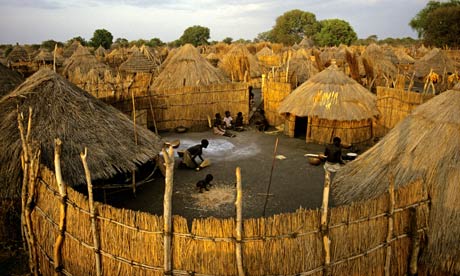
An Anuak village in southern Ethiopia. The World Bank is under fire for links between its funds and relocation of Ethiopians. Photograph: Alamy
An independent panel has called for an investigation into a World Bank-funded project in Ethiopia following accusations from refugees that the bank is funding a programme that forced people off their land.
In a report, seen by the Guardian, the inspection panel – the World Bank's independent accountability mechanism – calls for an investigation into complaints made by refugees from the Anuak indigenous group from Gambella, eastern Ethiopia, in relation to the bank's policies and procedures.
The refugees claim the Protection of Basic Services (PBS) programme funded by the bank and the UK Department for International Development (DfID), is contributing directly to the Ethiopian government's "villagisation" programme, introduced in 2010. The programme seeks to move people to new villages, but residents say this is done with little consultation or compensation, and that these sites lack adequate facilities.
In a letter sent to the panel in September, the refugees say some people have been forcibly relocated from their land, which is now being leased to foreign investors.
"These mass evictions have been carried out under the pretext of providing better services and improving the livelihoods of the communities," says the letter. "However, once they moved to the new sites, they found not only infertile land, but also no schools, clinics, wells or other basic services."
It says the government forced them to abandon their crops just before harvest, and they were not given any food assistance during the move. "Those farmers who refused to implement the programme … have been targeted with arrest, beating, torture and killing," the letter says.
The refugees say they "have all been severely harmed by the World Bank-financed [project], which is contributing directly to the Ethiopian government's villagisation programme in Gambella region".
The letter says Ethiopian government workers, whose salaries are paid for through the PBS programme, have been forced to implement villagisation.
DfID has been criticised for failing to address abuse allegations in the South Omo region of Ethiopia, where residents told DfID and USAid officials of their experiences.
DfID is also embroiled in a legal action over its links to the villagisation programme. An Ethiopian farmer claims he was forcibly evicted from his farm. His lawyers, Leigh Day & Co, say DfID money is linked to these abuses through PBS funding in Gambella. DfID has said it is responding to the legal concerns and reviewing the allegations of rights abuses in Ethiopia.
In its report, the panel says that although the World Bank management denies links between villagisation and the PBS programme, the two are attempting to achieve the same things. "[Villagisation] is a programme that aims at fundamentally restructuring settlement patterns, service infrastructure and livelihoods, including farming systems, in the Gambella region, and as such constitutes a significant context in which PBS operates. In this sense from a development perspective, the two programmes depend on each other, and may mutually influence the results of the other," says the panel report.
The panel says there are "conflicting assertions and differing views" on links between PBS and villagisation, the complaints by the refugees and the bank's adherence to its policies and procedures, which could adequately be addressed through an investigation.
In a response to the refugees' letter, the World Bank denied all links between the PBS and villagisation. It said it had not encountered any evidence of human rights abuses. It did admit the new sites "were not desirable", but said the Ethiopian government had asked for assistance to improve them.
According to David Pred, founder of Inclusive Development Internationalwho helped the Anuak file their complaint, the PBS is funding the majority of government departments responsible for implementing the villagisation programme. "It provides both the means and the justification for villagisation," said Pred.
The World Bank has been supporting the PBS programme since May 2006 with a commitment of more than $2bn. The bank's board was scheduled to meet on Tuesday to discuss the panel's report, but the meeting was postponed.
Human Rights Watch says many of the communities affected by villagisation have not been properly consulted about resettlement. It has interviewed several refugees from the region who reported that government officials have responded with violence and arbitrary detention when people have not agreed to relocate.
"The World Bank's president and board need to let the inspection panel do its job and answer the critical questions that have been raised by Ethiopians affected by this project," said Jessica Evans, senior international financial institutions advocate at Human Rights Watch. "If the World Bank doesn't support this investigation, its Ethiopia programme will continue to be shadowed by controversy."
The chairman of the UK parliament's international development committee, Sir Malcolm Bruce, said the allegations against villagisation are unsubstantiated. Bruce, who visited Ethiopia last week, said the UK programme "is delivering a very good result".

Monday, March 4, 2013

Displacement, Intimidation And Abuse: Land Loyalties In Ethiopia - OpEd | Albany Tribune News


Woman working in Ethiopia orchard

Displacement, Intimidation And Abuse: Land Loyalties In Ethiopia – OpEd

By  -- (March 1, 2013)

With the coming of industrial-size farms in Ethiopia, local people, villagers and pastoralists (deemed irrelevant to the Government’s, economically-driven development plans) are being threatened, and intimidated by the military; forcibly displaced and herded into camps, their homes destroyed. Along with vast agricultural complexes, dams are planned and constructed, water supplies re-directed to irrigate crops, forests burnt, natural habitats destroyed. Dissenting voices are brutally silenced – men beaten, children frightened, women raped, so too the land.
Over 80% of the 85 million population of Ethiopia live in rural areas, in settlements and villages, and work in agriculture. Many are small-scale farmers who, according to government figuresi, farm “eight percent (about 10,000,000 ha) of the national land area”, and traditional pastoralists who have, for generations, lived simple lives, culture, nature and livelihood entwined.
Huge tracts of agricultural land with water supplies are being leased to foreign companies for food export. The Oakland Institute (OI) ii, a US- based policy think-tank and leader in the field, have produced in-depth reports on worldwide land sales stating that, between 2008 and 2011, “3,619,509 hectares (ha) were transferred to domestic investors, state-owned enterprises and foreign companies”. Amounting to a third, if government figures are correct, of the land farmed by Ethiopians themselves, an area the size of a small country, e.g. Holland.

Government Genocide

Land grab (and associated water appropriation), Oxfam statesiii, occurs when “governments, banks or private investors buy up huge plots of land to make equally huge profits”. Since 2008 such speculation has vastly expanded; in 2009 alone the OI recorded that “foreign investors acquired 60 million ha of land [worldwide] – the size of France – through purchases or leases of land for commercial farming,” up from an annual average, pre-2008, of 4 million ha. Three quarters of all land deals take place in sub-Saharan Africa, in some of the most food-insecure, economically vulnerable, politically repressive countries in the world; precisely, some say, because of such advantageous commercial factors.
In Ethiopia, land sales are occurring in six key areas. Oromia and Gambella in the south, Amhara, Beneshangul, Gumuz, the Sidaama zone, or SNNP and the Lower Omo Valley – an area of outstanding natural beauty with acclaimed UNESCO World heritage status. The Ethiopian government’s conduct in Omo and Oromia, Genocide Watch (GW)iv considers “to have already reached stage 7 [of 8], genocidal massacres”. A statement that shocks us all, and casts shame upon the government and indeed slumbering donor nations, who act not, who speak not, but know well the cruel methods, which violate a plethora of human rights laws, employed by the Ethiopian People’s Revolutionary Democratic Front (EPRDF). A regime whose loyalties, it seems, rest firmly with investors, corporations, multi-nationals and the like, and who cares little for the people living upon the land, or indeed in the cities.

Forced from Home

Conditional within land lease agreements is the requirement that the government will clear the area of ‘encumbrances’, meaning indigenous people – families, children, pastoralists, cattle, wildlife, forests, anything in fact that will interfere with the leveling of the land, building of [foreign] workers’ accommodation, roads and the eventual sowing of crops.
The national three-year Villagisation program, initiated in 1985, aims to move 1.5 million people from their ancestral homes, over four states, into large settlements. The process is well under way, as these 2010 figures from Cultural Survivalv show, “by February 1987, 5.7 million people (15 percent of the rural population) had been moved into 11,000 new villages. By the end of this year, 10 million rural inhabitants (25 percent of the population) are expected to be villagized in 12 of Ethiopia’s 13 provinces.” Government propaganda justifying the policy states these new village centers will, “facilitate the provision of human social services by concentrating scattered homesteaders into central communities”, and facilitate ‘agrarian socialism’ – hence the leasing of mega chunks of land to multi-national corporations, without the participation of local people, whose land is being taken from them: a totalitarian version of socialism then.
Contrary to federal and international law, which requires the free, informed and prior consent of the people, this mass movement is being carried out without consultation or compensation, no matter the official claims to the contrary. Human Rights Watch (HRW) (28/08/12)vi reports how “Villagers who have been unwilling to move, or who refuse to mobilise others to do so, have been arrested and mistreated by the soldiers.” Once forcibly emptied, villages are destroyed and cattle killed or confiscated, the OI state, by government troops. Along with pastoralists, who number around 300,000 in Gambella alone, villagers are herded, sometimes literally, always metaphorically at the end of rifle, into Villagisation camps. And these, despite Government promises to, “provide basic resources and infrastructure, the new villages”, HRW found “have inadequate food, agricultural support, and health and education facilities”.
Resistance to moving is met with abuse and violence. HRW’s detailed report “Waiting for Death”vii, found that in Gambella, where the government plans to ‘relocate’ 225,000 people, “soldiers frequently beat or arrested individuals who questioned the motives of the program or refuse to move to the new villages [Villagisations]. Community leaders and young men are targeted [scores are arrested without due process]. There have also been credible allegations of rape and sexual assault by government soldiers. Fear and intimidation was widespread.” In a disturbing account of life within and without the Villagisation centers, the OI discovered, most disturbingly, that pastoralists (whose lifestyle and nature is to wander) if “encountered [by the military] outside of villages are told to relocate to the villages immediately”. Such restrictions conjure images of prison life rather than a peaceful, communal village, and contradict the government’s message of willing relocation, good community relations, participation and social harmony.

A Culture of Fear

Such abuse is not limited to Gambella – in the Lower Omo region, where huge, state-owned sugar plantations and the massive Gibe III Dam project are being developed, dissenting voices are, the OI report, subjected to “beatings, abuse and general intimidation”, in addition to extra-judicial prison sentencing.
“Fear and intimidation” is endemic, not just in areas associated with land sales, but throughout the country; suppression is common and freedom of expression greatly restricted. The media – TV, radio, press as well as print companies, are state-owned, so too the sole telecommunication company, restricting access to the internet, which is monitored. The judiciary is simply an extension of government, lacking credible independence, the political opposition marginalised and completely ineffective. International media are frowned upon and, in some areas (e.g. Ogaden) completely banned, such are the paranoid actions of the ruling EPRDF, which, it would seem, has much to hide.
Resentment and anger simmers amongst many displaced oppressed villagers. In April 2012 a group of men attacked the Saudi Star compound in Gambella and killed four employees. The men were quickly labeled ‘rebels’ and a military manhunt was instigated. The criminal act should be treated as such and the men brought to justice, however government forces have reacted with unwarranted unjustifiable violence and aggression to innocent civilians, as HRW (28/08/12) reported: “Ethiopian soldiers went house to house… arbitrarily arresting and beating young men and raping female relatives of suspects”. Any excuse, it seems, to unleash state violence, perpetrated by a regime that mistrusts even it’s own people. After the attack on Saudi Star, a company that has leased some 10,000 ha of prime Gambella land, the Ethiopian military accused four Anuak guards on duty at the time, of involvement in the attack and carried out extra- judicial killings (murder) on them all. Local villagers “alleged they were tortured”, and “women and girls raped either in their homes or in detention” (ibid). Illegal acts by the Ethiopian State that by any reasonable reading fits the definition of terrorism stated by the US militaryviii as, “the calculated use of unlawful violence or threat of unlawful violence to inculcate fear; intended to coerce or to intimidate governments or societies in the pursuit of goals that are generally political, religious, or ideological.” Terrifying tactics employed by the military in the search for information about ‘the rebels’ – a meaningless term evoking negative stereotypes, used alongside the ‘T’ word (terrorist) to demonise anyone who disagrees with disagreeable government policies and justify all violent measures by the benevolent regime – such is the perverse and dangerous use of language, facilitated by the international mainstream media that has infiltrated our imaginations.

The Myth of Development

The government proclaims land sales are part of a strategic, long-term approach to agriculture reforms and economic development, that foreign investment will fund infrastructure projects, create employment opportunities, help to eradicate hunger and poverty and benefit the community, local and national. The term development is itself an interesting one; distorted, linked and commonly limited almost exclusively to economic targets, meaning growth of GDP, established principally by the World Bank, whose policies and practices in relation to land sales, the OI discovered, “have glossed over critical issues such as human rights, food security and human dignity for local populations”, and its philanthropic sister, the International Monetary Fund; market fundamentalism driving the exported (one size fits all) policies, of both ideologically entrenched organisations, that promote models of development that seek to fulfill corporate interests first middle and last.
Defined in such limited ways, Ethiopia, having somehow achieved impressive GDP growth figures since 2004, (with a dizzy 9.8%, average, similar to that of India) would seem to be in the premiership of development. Inflation, though, sits at 30% and, whilst unemployment in urban areas has dropped to around 20%, over a quarter of young people aged 18-24 remain out of work; high unemployment in urban areas means young women are often forced into commercial sex work or domestic servitude.
Statistics compiled by The United Nations Development Programme (UNDP)ix, provide a broader, less GDP-rosy picture of the country. They place Ethiopia 174th (from 187 nations) on the Human development index (HDI), with average life expectancy of 59 years and 40% of people living in poverty (on less than $1.25 a day). The 2012 Global Hunger Index makes Ethiopia the 5th hungriest country in the world (IFPRI)x, with between 12 and 15 million people a year relying on food aid to keep them alive. What growth there is benefits the rich, privileged minority. There is a growing divide between the 99.9% and the small number of wealthy Ethiopians – who, coincidentally, are mainly members of the ruling party trickle down, gushing up’, concentrating wealth with the wealthy; as the Inter Press Service (IPS) 22/08/12xi reports, “development has yet to reach the vast majority of the country’s population. Instead, much of this wealth – and political power – has been retained by the ruling party and, particularly, by the tiny Tigrayan minority community to which [former Prime Minister] Meles belonged.”

“Protect, Respect and Remedy”

Protagonists laying claim to the all-inclusive healing powers of agriculture and agro-industrial projects, contradict, the OI states, “the basic facts and evidence showing growing impoverishment experienced on the ground”. What about the bumper benefits promised, particularly the numerous employment opportunities? It turns out industrialised farming is highly mechanised and offers few jobs; overseas companies are not concerned with providing employment for local people and care little for their well-being, making good bedmates for the ruling party. They bring the workers they need, and are allowed to do so by the Ethiopian government, which places no constraints on their operations.
Such shameful indifference contravenes the letter and spirit of the United Nations (UN) “Protect, Respect and Remedy” Framework. Endorsed by the UN Human Rights Council on 16th June 2011, the guiding principles outlined, “provide an authoritative global standard for preventing and addressing the risk of adverse impacts on human rights linked to business activity.”xii Corporations have a duty under the framework to “prevent or mitigate adverse human rights impacts that are directly linked to their operations… even if they have not contributed to their impacts”xiii Although not legally enforceable, these principles of decency offer recourse to human rights organisations and community groups, and should be morally binding for multinationals, whose profit-driven activities in Ethiopia, facilitated by a brutal regime that ignores fundamental human rights, are causing intense suffering to hundreds of thousands of indigenous people.
Notes:
i. http://www.fao.org/ag/AGP/AGPC/doc/counprof/ethiopia/ethiopia.htm
ii. www.oaklandinstitute.org/faqs-indian-agriculture-investments-ethiopia
iii. http://www.oxfam.org.uk/get-involved/campaign-with-us/our-campaigns/grow/guide-to-land-grabs
iv. http://www.genocidewatch.org/ethiopia.html
v. http://www.culturalsurvival.org/ourpublications/csq/article/resettlement-and-villagization-tools-militarization-sw-ethiopia
vi. http://www.hrw.org/news/2012/08/28/ethiopia-army-commits-torture-rape
vii. www.hrw.org/sites/default/files/…/ethiopia0112webwcover_0.pdf
viii. http://ra.defense.gov/documents/rtm/jp1_02.pdf
ix. http://hdrstats.undp.org/en/countries/profiles/ETH.html
x. http://www.ifpri.org/publication/2012-global-hunger-index
xi. http://www.ipsnews.net/2012/08/death-of-ethiopian-leader-meles-brings-opportunity-for-peace/
xii. http://www.unglobalcompact.org/Issues/human_rights/The_UN_SRSG_and_the_UN_Global_Compact.html
xiii. www.ohchr.org/Documents/…/GuidingPrinciplesBusinessHR_EN.pdf